Best Strategy Games: Questions to Ask First

Strategy games reward planning, so it makes sense to plan a little before you pick up any of the best strategy games too. It's easy to buy a game that looks amazing on the shelf and then watch it sit in a closet because it takes four hours or needs five players you don't have. These days I ask myself a handful of questions first. Here they are, in the order I usually think about them.
Short on time? Our top picks: Catan, Ticket to Ride, Carcassonne and Wingspan. See all picks
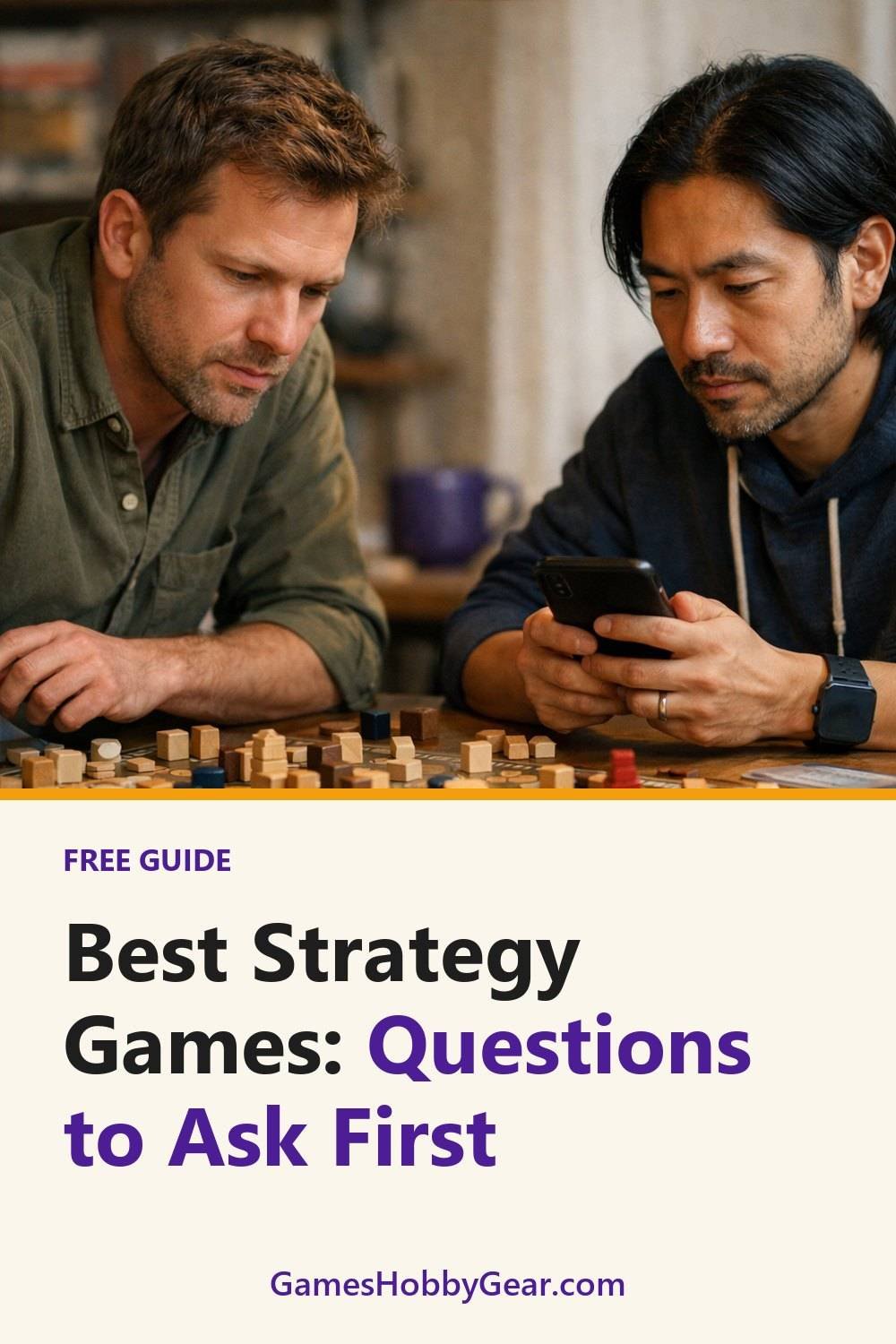
1. How long will a game actually last?
Every box lists a play time, usually something like "60-90 minutes." Treat that number as a best case. It assumes everyone already knows the rules and nobody stops to grab snacks or argue about a turn.
For your first few games, I'd add about half again to whatever the box says. A "90-minute" game can easily run two and a half hours the first time, especially if one person at the table likes to think hard before every move. We all know that person. Sometimes it's me.
Tip: Think about when you'll really play. If it's weeknights after dinner, look for games that list an hour or less. Save the long ones for a free Saturday.
2. How many players does it really work with for strategy board games?
The player count on the box is a range, like 1-5 or 2-6, and family board games are no exception. But a game that technically supports six players isn't always fun with six. Sometimes the wait between turns gets long, and people start checking their phones.
The flip side happens too. Some games are listed as 2-4 but feel thin with only two, because the strategy depends on players blocking each other. Reading a few player reviews will often tell you the "sweet spot" number that people recommend.
Tip: Be honest about who you play with most. If it's usually you and one partner, buy for two, even if you dream of big game nights.
3. How hard are the rules to learn for adults and beginners?
This is the one that has burned me the most. Some games come with a rulebook so thick it feels like homework. We spent the whole evening reading and never played a full round. Nobody wanted to try again after that.
Look for war strategy games and other titles that include a quick-start guide or a beginner setup. Some publishers also post rulebooks on their own websites, so you can flip through before buying. If the rules look like a wall of tiny text with lots of exceptions, that's a sign to slow down.
Tip: If you're new to strategy games, start with something rated "light" or "medium-light" by players. You can always move up later. Jumping straight to the heaviest game on the list is overrated, in my opinion.
4. Is it more luck or more skill in the best board games for adults?
Some strategy games are almost pure skill. Chess.com is one place to try it, and chess is the classic example: no dice, no shuffled cards, just your choices. Others mix in dice rolls or card draws, so a newer player still has a fair shot at winning.
Neither is better. It depends on your group. If you play with kids or friends who don't love losing to the same person every time, a bit of luck keeps things friendly. If you enjoy a real brain workout and don't mind a crushing loss now and then, go for the low-luck stuff.
Tip: Watch a short gameplay video if you can, or try the game through board games online first. You'll see pretty quickly whether the dice are deciding everything or the players are.
5. Can you play it solo, even with online strategy games?
More strategy games come with a solo mode now, and I'm glad. Some nights nobody's free, and I still want to play something. A good solo mode feels like solving a puzzle at your own pace.
That said, not all solo modes are equal. Some feel like a real part of the design. Others seem added at the last minute, with a clunky "robot opponent" that takes more effort to run than the game itself. Reviews from solo players are the best way to tell which is which.
Tip: If solo play matters to you, search for reviews that focus on it specifically. A game can be great with four people and dull alone.
By the way, if you like tinkering with game ideas, you can grab my free Blank Board Game Board and 10 Card Templates when you join the email list.
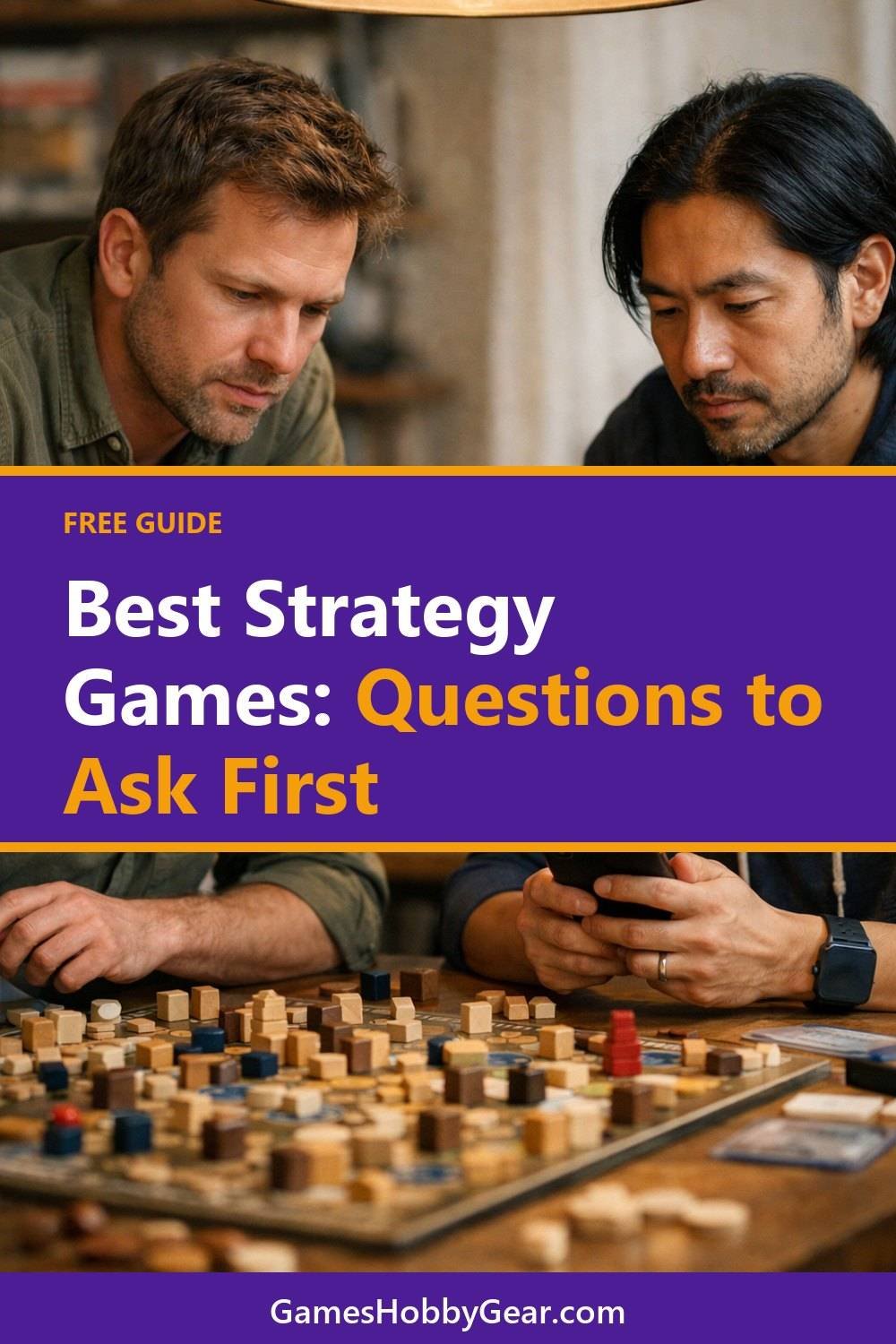
6. How much table space does it need?
This one sneaks up on people. Some strategy games have a big board, lots of player mats, card piles, and little tokens everywhere. A big game board can be a problem on a small kitchen table, so check the dimensions first or you may end up playing on the floor. Long sessions on the floor around a low table can be hard on the knees.
Check photos of the game fully set up, not just the box art. Player photos on review sites tend to show the real sprawl.
Tip: Measure your usual table before buying anything with "epic" in the description.
7. How much setup and cleanup is there?
Related to table space, but different. A game that takes 20 minutes to set up and 15 to pack away gets played less. That's just how it goes. The games people return to most are often the ones that are quick to get going.
Lots of small pieces can also mean lost pieces, especially with kids or pets around. Good storage inserts help, but they don't come with every game.
Tip: Small zip bags or a cheap craft organizer can cut setup time a lot. It's one of the few "extras" I think is worth it.
8. Will it hold up after a few plays?
Some games feel fresh every time because the setup changes, or there are many ways to win. Others feel solved after three or four games. Once you find the best strategy, the fun drains out.
Player reviews that mention "replay value" are helpful here. Look for comments from people who have played it ten or twenty times, not just once.
Tip: Be a little careful with games that rely on expansions to stay interesting. Fine if you love it, but the costs can add up.
9. What's the return policy?
Nobody likes thinking about returns when they're excited about a new game. But a lot of stores won't take back a game once the plastic wrap is off. Others will, but only within a short window.
Check the seller's page before you buy, and definitely before you open it. If you're unsure, ask the store directly. Policies vary a lot, and I don't want to guess for you.
Tip: If you're torn about a game, see if a friend owns it, try a free strategy game on your phone, or visit a local game café with a copy.
If you're planning regular game nights, the Game Night and Hobby Planner and Checklist Bundle below this post can help you keep track of who's coming, what you're playing, and what snacks you need. Nothing fancy, just handy.
Strategy games worth a look
If you're ready to start shopping, here are a few well-known strategy games and tools that fit the questions above. Think of them as starting points, not a ranking.
Catan
A long-running classic that suits groups who want trading and negotiation along with planning. Check the player count for the edition you're buying, since bigger groups may need an expansion.
Ticket to Ride
A friendly pick for newer players and families who want rules that are easy to explain. Look at which map or edition you're getting, as they differ in feel and in how many people they suit.
Carcassonne
A tile-laying game that works well for people who want something approachable with some light strategy. Check which version and expansions are included before you buy.
Wingspan
A good fit for players who like building an engine of card combinations and want a calmer, less confrontational game. Look at reviews on the solo mode if playing alone matters to you.
Pandemic
A cooperative game that suits groups who would rather work together than compete. Check whether your group is comfortable with one strong player steering the team.
Chess.com
A handy way to try a low-luck, pure-skill strategy game before spending anything on a physical set. Check which features are free and which need a paid membership.
Board Game Arena
A site that lets you try many board games online, which helps with the "try before you buy" question. Check whether the specific game you want is offered there and how its rules are presented.
Check current plans and prices on each brand's own site before you decide.
FAQ
What are the best new board games for beginners?
Look for something with a short play time, a quick-start guide, and some luck mixed in. Games rated "light" by players are a safe place to begin. You'll learn what you enjoy before spending on bigger, heavier games.
Are long strategy games worth it?
They can be, if you have a group that loves them and the time to play. For most people, though, shorter games get played far more often. It makes sense to buy a long one only if you already know you'll make time for it.
Do I need expansions?
Usually not at first. Play the base game a bunch of times and see if you still want more. Expansions are best for games you already love, not as a fix for one you're bored with.
How can I try a game before buying?
Watch a gameplay video, borrow from a friend, try mobile strategy games or a site like Board Game Arena, or visit a game café if there's one nearby. Some libraries lend board games too. Even one play can tell you a lot.
Before your next game purchase, run through these questions and you'll likely skip a few duds. If you want to make your own game or house rules, sign up for the free Blank Board Game Board and 10 Card Templates. Then take a look at the products below this post, including the Game Night and Hobby Planner and Checklist Bundle, if you want help keeping your game nights organized.
Printables and tools that can help
Gaming Headsets Buyer's Guide and Comparison Sheets
A printable guide and comparison sheets to write down what matters to you before you look at any seller...
See detailsGame Night and Hobby Planner and Checklist Bundle
A printable bundle with a 30-day goal page, weekly planner and checklists for gamers and...
See details