Best Card Games: Who It Suits and Who Should Skip It
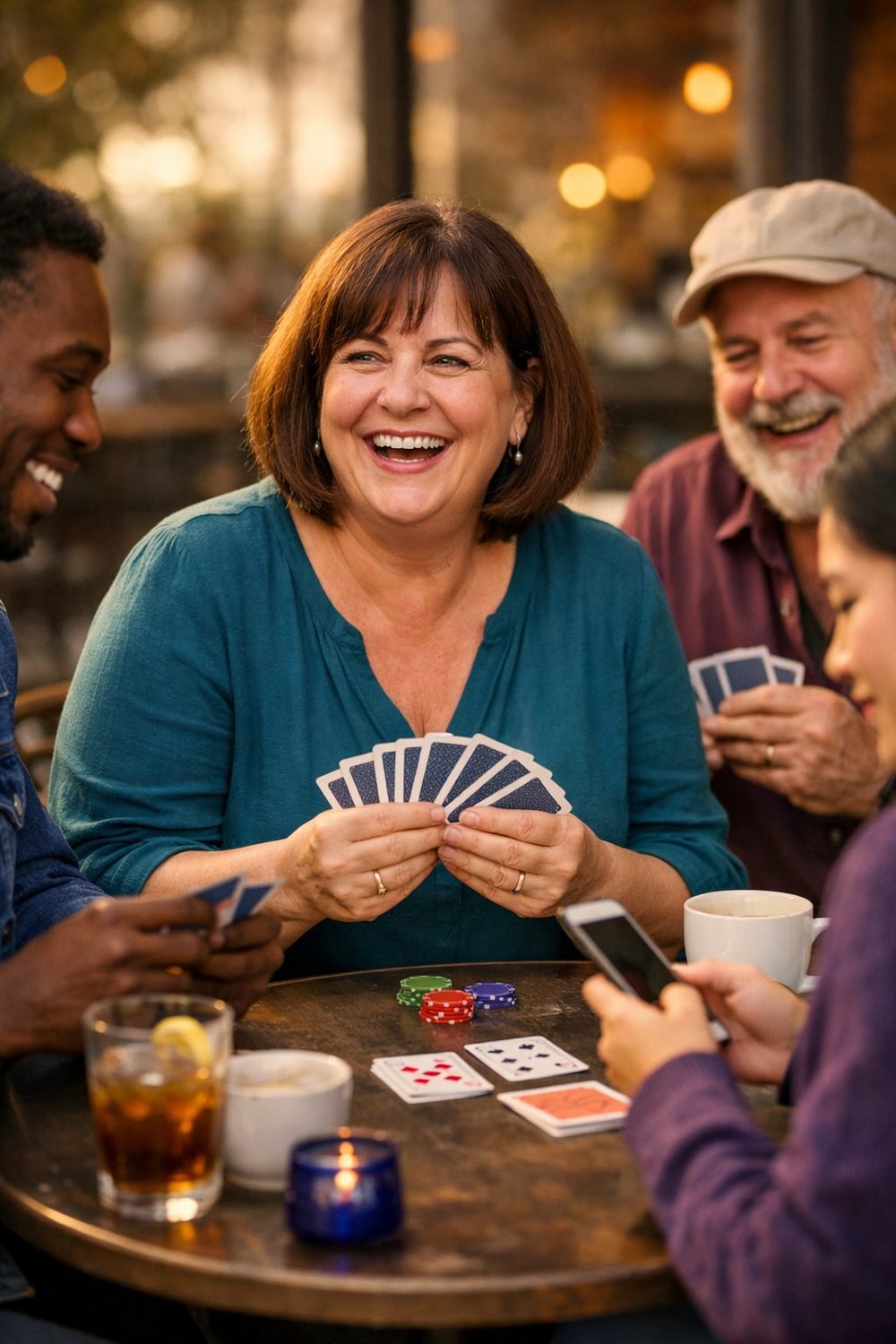
The best card games get recommended for everything. Rainy days, parties, camping, date night, keeping kids off screens. Some of that is fair. Some of it isn't, and I've sat through enough flat game nights to know the difference.
So instead of a list of titles, this post is about fit. Who gets the most out of a deck of cards, and who'd honestly be happier with something else. Read through, see which items sound like you, and you'll have a better idea of what to put on the table next time.
Short on time? Our top picks: Exploding Kittens, Uno, Sushi Go! and Love Letter. See all picks
1. Good fit: fun card games for small groups of two to six
This is where card games really shine. Most of them are built for a handful of players, and they feel tight and lively at that size. Everyone's turn comes around fast, so nobody's scrolling their phone while they wait.
Two-player card games are a good fit for playing with a partner after dinner. Twenty minutes, a cup of tea, done. It's one of my favorite parts of the week, and it never feels like a big event we had to plan.
Once you push past six, though, things can drag. Some games say they handle eight, but turns get slow and the table gets crowded with elbows.
Practical tip: Check the player count on the box, then knock one off for the sweet spot. A game listed as "2 to 6" often plays best at 3 to 5.
2. Good fit: travel and small bags
A deck packs flat. That's the whole pitch, and it's a good one. Cards work almost anywhere, such as on a ferry, in an airport, in a tent with a headlamp, or on a hotel bed where the cards slide into the dip in the middle.
Board games just can't do that. Even "travel editions" tend to have tiny pieces that roll under seats and vanish forever.
The one thing I'd warn you about is wind. Outdoor card games sound charming until a gust sends half your hand across the beach. Learned that the hard way.
Practical tip: Put your deck in a small zip bag with a rubber band around it. Cheap, keeps the cards dry, and the box stops getting crushed.
3. Good fit: family card games for mixed ages at one table
Simple card games are great for families where the ages are all over the place, and they make wonderful family card games. A seven-year-old and a grandparent can play the same matching or shedding game and both actually enjoy it.
The trick is picking rules that fit on one short page. If the rules need a video to explain, the youngest players will check out, and the oldest might too. Games with a bit of luck help as well, since they let a kid beat an adult fair and square now and then. That matters more than you'd think.
What I'd skip: anything with heavy bluffing for very young kids. They either give it away instantly or get upset when someone lies to them. Save those for when they're a little older.
Practical tip: Play one open-handed practice round where everyone shows their cards. People learn faster when they can see what others are thinking.
4. Good fit: short evenings and tired brains
Not every game night needs to be a big deal, even with the best card games for adults. Some nights you've got forty minutes and about half a working brain. Card games are made for that.
Setup is usually shuffle and deal. Cleanup is tossing everything back in the box. Compare that with a board game where you're sorting tokens into little bags for ten minutes at 11pm.
Planning helps here, oddly. If you like to keep a rotation of quick games ready for different moods, the Game Night and Hobby Planner and Checklist Bundle below this post has space for tracking what you've played and what flopped. You might use something similar so you're not reaching for the same game every single week.
Practical tip: Keep two or three short card games by the couch instead of on a shelf. If they're in reach, you'll actually play them.
5. Good fit: people who like to tinker
Cards are easy to change, which makes seven card games and other classics simple to tweak. You can tweak a rule, remove a card, or invent a house variant without breaking anything. Some of my best game nights came from a "what if we tried it this way" moment.
Plenty of people go further and design their own little games. A stack of blank cards and a pen is all you really need to start. If that sounds fun, the free Blank Board Game Board and 10 Card Templates you get for joining our email list is a handy place to sketch your first idea.
Practical tip: Write any house rules on a sticky note and keep it in the box. Otherwise you'll argue about them again in three months.
6. Skip if: you want a long campaign
Here's where card games fall short. If your group loves big stories that run over many sessions, with characters that grow and choices that carry forward, most card games won't scratch that itch.
There are some card-based campaign games out there, sure. But a lot of the time, a board game or a tabletop role-playing game does the long story better. There's more room for maps, history, and the stuff that makes week six feel different from week one.
Some people try forcing a quick card game into a "season" with score tracking, which can keep it fresh. It was fine for two weeks, then everyone lost interest. It just wasn't built for it.
Practical tip: Be honest about what your group wants before you buy. Ask, "Do we want a story, or do we want a quick fight?" The answer usually points the right way.
7. Skip if: you want a big table moment
Cards need little space. That's great for travel, but it's not so great if you want a game that feels like an event. Some people love the look of a sprawling board covered in pieces, the kind of thing that makes guests stop and stare when they walk in.
A hand of cards won't give you that. It's quieter and more personal, with each player's game hidden in their own hand.
Large groups also tend to do better with party games built for teams, or bigger board games with a shared center. Ten people around one deck can get messy.
Practical tip: For bigger gatherings, try one card game as a warm-up, then switch to something with a shared board as the main event.
8. Skip if: you really dislike shuffling
This one sounds silly, but it's real. Some games have you reshuffle constantly, and if you've got stiff hands, small hands, or just no patience for it, it gets old fast.
A friend of mine has sore wrists and quietly dreaded our card nights for ages before saying anything. We started handing the shuffling to whoever wanted it, and that fixed a lot. But if it still bugs you, there are lots of games that use dice, tiles, or boards instead.
Card shufflers exist too. Some people swear by them. Cheap ones can jam a lot, so it's worth reading reviews and checking the seller's page before buying one.
Practical tip: Try the "pile shuffle" method. Deal cards into several piles, then stack them. It's slower, but it's gentle on your hands.
9. Mixed bag: card games online
A lot of card games have digital versions now, and sites like Board Game Arena are a decent way to play with friends far away. You lose the feel of real cards, which I miss, but you gain the chance to play with someone across the country on a Tuesday night.
Sound is the part people forget. Talking through a laptop mic while someone's dog barks in the background gets tiring. If you're putting together a setup for regular online game nights, the Gaming Headsets Buyer's Guide and Comparison Sheets below this post can help you compare options without guessing.
Practical tip: Set a regular time for online games. "Sometime this week" never happens. "Thursday at 8" does.
Card games and gear worth a look
Here are some real games and accessories that match the situations above. Each one suits a different kind of group, so read the note on who it fits.
Exploding Kittens
A quick, silly game that suits families and casual groups who want something easy to learn. Check the age guidance on the box, since the humor may not suit every household.
Uno
A familiar shedding game that works well for mixed ages at one table. Look at which version you are buying, as several editions and rule variants exist.
Sushi Go!
A light card game that suits newcomers and short evenings. Check the player count on the box and see whether it fits the size of your usual group.
Love Letter
A very small game that suits travel bags and two-player nights. Check which edition you are getting, since themes differ between releases.
Bicycle Playing Cards
A standard deck that opens up a huge range of classic games. Check the finish and size of the deck, and whether you want a plain or a decorative back.
Ultra PRO card sleeves
Sleeves suit anyone who plays the same deck often and wants it to last. Check the sleeve size against your cards before you buy, as card dimensions vary.
Board Game Arena
A website for playing digital versions of many tabletop games with friends far away. Check which games are included and what the free and paid options allow.
Check current plans and prices on each brand's own site before you decide.
FAQ
Are card games good for just two people?
Yes, many are. Lots of card games are designed with two players in mind, and they often play faster and tighter than bigger games. Check the box for a two-player option before you buy.
What age can kids start playing card games?
It depends on the child and the game. Simple matching games tend to work for younger kids, while games with strategy or bluffing suit older ones. The age on the box is a decent starting point, but you know your kid best.
Do I need special cards, or will a regular deck work?
A regular deck of playing cards, such as Bicycle Playing Cards, covers a huge number of classic games. Some games need their own custom deck, though, so read what's included. Starting with a standard deck is a cheap way to find out if your group even enjoys cards, and you can pick the best playing cards later.
How do I keep cards from wearing out?
Card sleeves, such as Ultra PRO card sleeves, help a lot, especially for decks you play often. Keep drinks and snacks away from the table, and store the deck somewhere dry. A worn deck still works, it just gets easier to spot certain cards.
If a few of these items sounded like your group, that's a good sign cards will work for you. A good next step is to grab the free Blank Board Game Board and 10 Card Templates by joining the email list, then try making a tiny game of your own. After that, have a look at the products below this post if you want help planning game nights or setting up for online play.
Printables and tools that can help
Gaming Headsets Buyer's Guide and Comparison Sheets
A printable guide and comparison sheets to write down what matters to you before you look at any seller...
See detailsGame Night and Hobby Planner and Checklist Bundle
A printable bundle with a 30-day goal page, weekly planner and checklists for gamers and...
See details